|
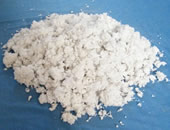
Engineered Fibres
Engineered Fibres are a family of fibres that have
been developed to meet specific engineering needs.
They are made by melting pure oxides in an electric
furnace and pouring the molten material into a fiberising
chamber. Depending upon the fibre diameter requiredthe
molten material is fiberised either by dropping it onto a
rotating wheelor atomising it with compressed air and
drawing the droplets into fibres in an accelerating air
stream.
SELECTION OF FIBRE TYPE
This is dependent upon the application since certain
applications require fibre without unfiberised particles
whereas in other applications unfiberised materials does
not cause a problem. For advice on the selection of the
correct fibre grade contact your local Thermal Ceramics
distributor.
CLASSIFICATION TEMPERATURE
1100°C
1200°C
1260°C
1425°C
Chopped Fibres
Thermal Ceramics has installed special equipment to
enable the average fibre length to be tailored to suit
individual customer requirements. Mean length can be
controlled from 150 micron up to 25 mm. For the majority
of applicationsthe standard grades of chopped fibres are
sufficient (length is measured using a settling test called
beaker value. The higher the number in this testthe
longer the fibre). The standard grades are :
20 Coarse
Approx. “Beaker value” 200 ml*
15 Medium
Approx. “Beaker value” 150 ml*
08 Fine
Approx. “Beaker value” 80 ml*
*Typical Figures TCL QC test
BENEFITS
Excellent Resistance to chemical attack
Unaffected by oilwater or steam
Very low thermal expansion
Excellent shock resistance
Good corrosion resistance
Low moisture absorption
Low electrical conductivity
Good tensile strength
Constant coefficient of friction
TYPICAL APPLICATIONS
Applicationswhere the fibres are used to modify specific
properties of a material : such as wearstrength or fatigue
are as follows :
Friction Materials
Mastics
Paints
Cements
Plastics
Metals
|